
Generative AI in Healthcare
The Benefits and Risks
Generative AI, a branch of artificial intelligence that can create new content, is poised to revolutionize healthcare. By mimicking and expanding upon existing data, it offers powerful tools for diagnosis, treatment, and resource management. However, alongside these promising benefits lie potential risks that require careful consideration.The Benefits:
Faster Drug Discovery: By analyzing mountains of data on molecular structures and disease mechanisms, generative AI can accelerate the design and testing of new drugs. This could lead to shorter development times and quicker access to life-saving treatments.
Personalized Medicine: AI can analyze individual patient data, including genetics, lifestyle, and medical history, to predict disease risk and create customized treatment plans. This could result in more effective interventions and improved patient outcomes.
Enhanced Diagnostics: Generative AI can analyze medical images and other complex data to detect diseases at earlier stages with greater accuracy. This could lead to earlier treatment and better prognoses.
Administrative Efficiency: AI can automate tedious tasks like insurance claim processing and medical record transcription, freeing up healthcare professionals to focus on patient care.
Drug Development Cost Reduction: AI-powered drug discovery can significantly reduce the time and cost of bringing new drugs to market.
The Risks:
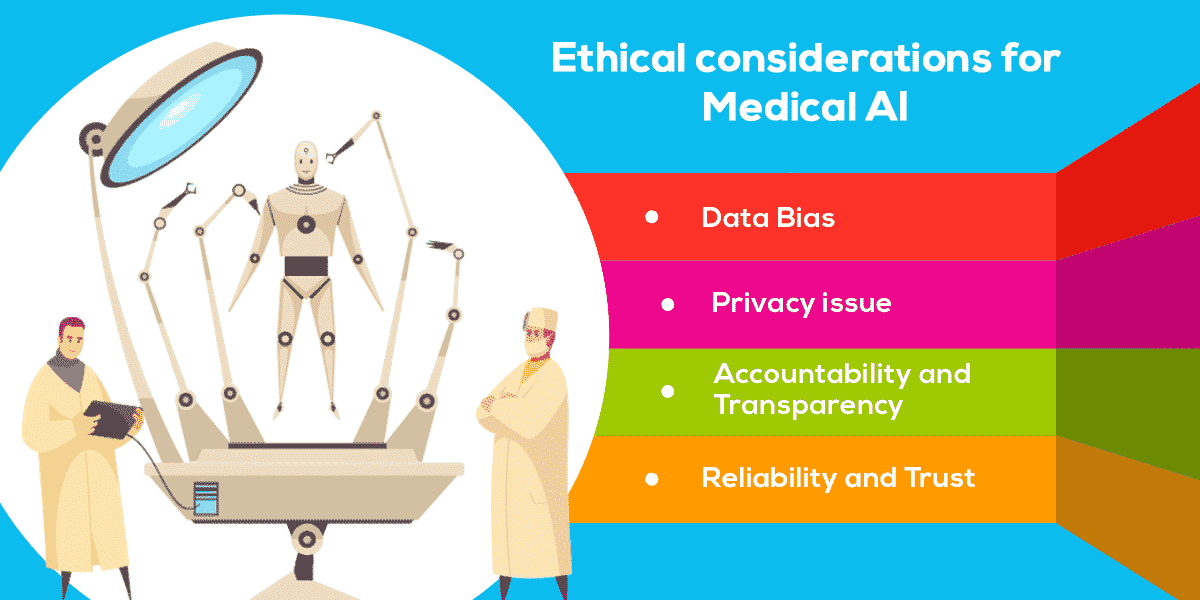
Bias and Discrimination: AI algorithms trained on biased data can perpetuate existing inequalities in healthcare. Careful data selection and bias mitigation strategies are crucial to ensure fairness and inclusivity.
Transparency and Explainability: The complex workings of generative AI models can be opaque, making it difficult to understand how they arrive at their conclusions. This raises concerns about accountability and trust in AI-driven healthcare decisions.
Job Displacement: Automation powered by AI could lead to job losses in certain healthcare sectors. It's essential to consider reskilling and retraining programs to mitigate potential negative impacts on healthcare workers.
Data Privacy and Security: Generative AI relies on vast amounts of patient data, raising concerns about privacy breaches and potential misuse. Robust data security measures and clear ethical guidelines are necessary to protect patient information.
Overreliance on Technology: While AI can be a valuable tool, it should not replace human judgment and doctor-patient relationships. Overreliance on AI could lead to dehumanization of healthcare and missed diagnoses.
The Future:
The responsible development and implementation of generative AI is crucial to maximize its benefits for healthcare while mitigating the risks. Open dialogue, collaboration between stakeholders, and robust ethical frameworks are essential to ensure that AI serves as a force for good in healthcare.Additional Points to Consider:
The regulatory landscape for AI in healthcare is still evolving, and clear guidelines are needed to ensure the safety and trustworthiness of these technologies.Public education and awareness about the potential and limitations of AI in healthcare are crucial to fostering trust and acceptance.
Ongoing research and development efforts are needed to address the challenges and unlock the full potential of generative AI in healthcare.
By carefully considering the benefits and risks, we can harness the power of generative AI to create a healthier and more equitable future for everyone.