

Artificial intelligence (AI) has emerged as a transformative technology, revolutionizing various aspects of our lives. With its ability to analyze vast amounts of data, make complex decisions, and mimic human intelligence, AI has sparked debates about its potential to replace human tasks and even entire jobs. In this article, we will delve into the evolving landscape of AI, exploring its advancements, capabilities, and limitations. We will examine the benefits offered by AI technology, but also address the ethical considerations surrounding its widespread adoption. Ultimately, we seek to understand the complex relationship between AI and humans, exploring the potential for collaboration and the implications for various industries and society as a whole.
1. Introduction: Understanding the current landscape of AI and its potential impact on human roles
1.1 Defining artificial intelligence
Artificial intelligence, or AI for short, is a field of computer science that focuses on creating intelligent machines capable of performing tasks that typically require human intelligence. These tasks include problem-solving, decision-making, speech recognition, and much more. AI systems aim to mimic human cognitive abilities by analyzing vast amounts of data, learning from patterns, and making predictions or taking actions based on that information.
1.2 Brief history and evolution of AI

The concept of AI can be traced back to the mid-20th century when scientists and researchers began exploring the idea of creating machines that could imitate human intelligence. Over the years, AI has evolved significantly, driven by breakthroughs in computing power, algorithms, and data availability. From early AI systems designed to play chess or solve mathematical problems, to today's sophisticated AI technologies that power virtual assistants and autonomous vehicles, the field has come a long way.
1.3 The impact of AI on society
AI is already making a profound impact on society in various ways. From improving healthcare diagnosis to revolutionizing customer service, AI is transforming industries and streamlining processes. However, this rapid advancement has also raised concerns about the potential displacement of human workers as AI systems become capable of performing tasks traditionally done by humans. The question arises: Can AI truly replace humans in the workforce?
2. The Rise of AI: Examining the advancements and capabilities of artificial intelligence
2.1 Machine learning and deep learning algorithms
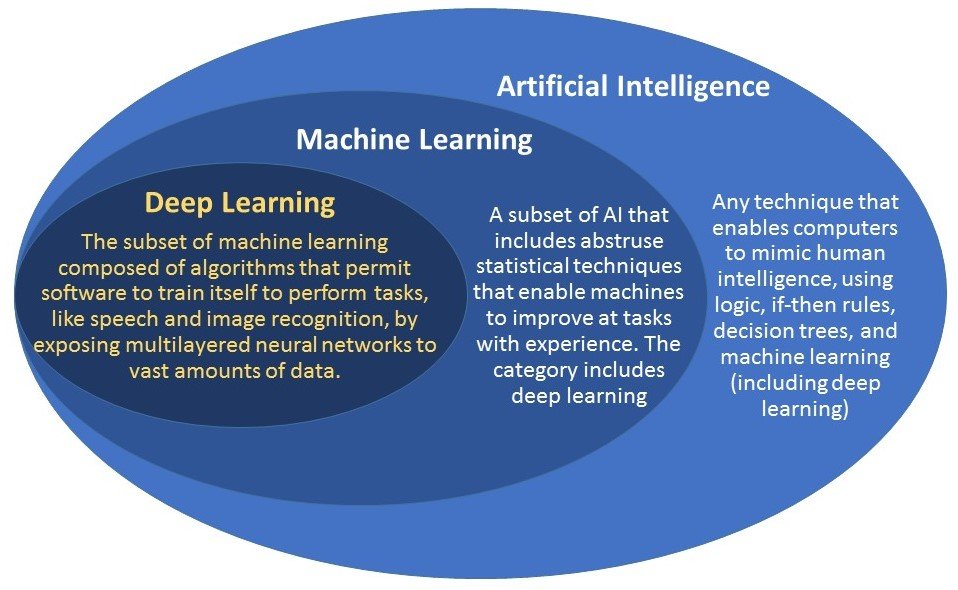
Machine learning and deep learning algorithms are at the heart of AI advancements. These algorithms enable AI systems to learn from data and improve their performance over time without explicit programming. Machine learning algorithms find patterns and make predictions, while deep learning algorithms mimic the workings of the human brain, allowing AI systems to process complex information and make more sophisticated decisions.
2.2 Natural language processing and speech recognition
Natural language processing (NLP) and speech recognition technologies have made significant strides in recent years. NLP enables AI systems to understand and interpret human language, making it possible for virtual assistants like Siri or Alexa to respond to voice commands. Speech recognition technology, on the other hand, converts spoken words into written text, enhancing communication and enabling hands-free interactions.
2.3 Computer vision and image recognition
Computer vision and image recognition capabilities have progressed rapidly, enabling AI systems to recognize and understand images and videos. This technology has numerous applications, from facial recognition for security purposes to object detection in self-driving cars. AI-powered computer vision is revolutionizing industries such as healthcare, agriculture, and manufacturing, where visual data analysis plays a crucial role.
3. AI in the Workplace: Exploring the potential for AI to replace human tasks and jobs
3.1 Automation of repetitive and mundane tasks
One area where AI has the potential to replace humans is in automating repetitive and mundane tasks. AI systems excel at performing monotonous tasks that require precision and attention to detail, such as data entry or quality control. By automating these tasks, organizations can free up human workers to focus on more creative and strategic endeavors.
3.2 AI-driven decision-making and predictive analytics
AI's ability to analyze vast amounts of data and make data-driven decisions is another area where it may replace human roles. AI systems can process and interpret data much faster than humans, leading to more informed decision-making. Moreover, predictive analytics, powered by AI, can forecast future trends and outcomes, helping businesses optimize their strategies and operations.
3.3 The impact on various industries and job sectors
While AI has the potential to automate certain tasks, it's important to note that it is unlikely to completely replace humans in most industries. Instead, AI is likely to augment human capabilities, enabling workers to be more efficient and effective. In some industries, AI may lead to a shift in job roles, with a greater emphasis on tasks that require human creativity, emotional intelligence, and critical thinking.
4. The Benefits of AI: Discussing the advantages and efficiencies offered by AI technology
4.1 Increased productivity and efficiency
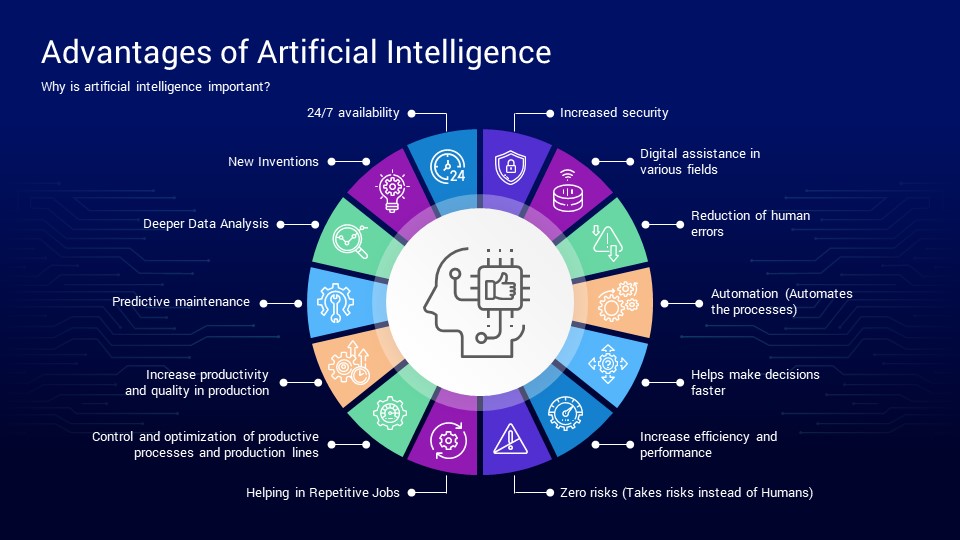
One of the significant benefits of AI is its ability to increase productivity and efficiency. AI systems can work tirelessly, analyzing vast amounts of data and performing tasks at high speeds. By automating repetitive tasks and streamlining processes, AI can help organizations achieve higher productivity levels and allocate resources more effectively.
4.2 Enhanced accuracy and precision
AI systems are designed to minimize errors and improve accuracy. Since AI algorithms can analyze data with great precision and consistency, they can reduce human errors caused by fatigue, distractions, or biases. This enhanced accuracy can have significant implications, especially in industries where precision is paramount, such as healthcare diagnostics or financial forecasting.
4.3 Cost reduction and resource optimization
Implementing AI technology can lead to cost reductions and resource optimization. By automating tasks and workflows, organizations can reduce their reliance on manual labor, potentially lowering labor costs. AI systems can also optimize resource allocation by analyzing data to identify inefficiencies and recommend improvements, leading to cost savings and improved operational efficiency.
In conclusion, while AI has undoubtedly advanced and possesses the potential to automate certain tasks, the complete replacement of humans in the workforce is unlikely across most industries. AI will likely augment human capabilities, leading to more efficient and effective workplaces. The benefits offered by AI, such as increased productivity, enhanced accuracy, and cost reduction, make it a valuable tool for organizations when appropriately integrated into their operations.
5. The Limits of AI: Addressing the limitations and challenges faced by AI in replacing human skills and decision-making

5.1 Contextual Understanding and Common-Sense Reasoning
AI is undeniably impressive when it comes to processing vast amounts of data and performing specific tasks. However, one area where AI falls short is contextual understanding and common-sense reasoning. While AI algorithms can analyze patterns and make predictions based on available data, they often struggle to comprehend the nuances that humans effortlessly grasp. Understanding context, making intuitive leaps, and employing common sense are fundamental aspects of decision-making that AI hasn't quite mastered yet.
5.2 Emotional Intelligence and Empathy
Ah, emotions, the complex yet beautiful mess that makes us human. While AI can analyze textual or vocal cues to detect emotions, it still lacks the ability to truly understand and empathize with human emotions. Emotional intelligence involves not only identifying emotions but also comprehending their underlying causes and responding appropriately. Empathy, which plays a vital role in various professions like counseling and therapy, remains a uniquely human trait that AI struggles to replicate.
5.3 Ethical and Moral Decision-Making
Ethics and morals are the guiding principles that shape our decisions and actions. While AI can be programmed to follow a set of rules or algorithms, the ability to navigate the complexities of ethical dilemmas and make morally sound choices is a human quality that AI has yet to acquire. Humans possess the capacity to weigh the consequences, consider values, and adapt to different ethical frameworks, which makes them indispensable in fields where morally challenging decisions are common.
6. Human vs AI Collaboration: Analyzing the potential for human-AI partnerships and synergies
6.1 Augmenting Human Capabilities with AI Assistance
AI has the potential to serve as an incredible assistant, helping humans enhance their capabilities and achieve greater productivity. By automating mundane and repetitive tasks, AI frees up human energy and creativity for more meaningful and strategic work. With AI handling the repetitive aspects, humans can focus on complex problem-solving, critical thinking, and exercising their unique skills that require a personal touch.
6.2 Enhancing Creativity and Innovation through Human-AI Collaboration
While some fear that AI will replace human creativity, there's an exciting opportunity for a fruitful collaboration between humans and AI to foster innovation. AI algorithms can analyze vast amounts of data, identify patterns, and generate suggestions. When these insights are combined with human imagination, intuition, and the ability to think outside the box, the possibilities for creativity and innovation become limitless. Human-AI partnerships can lead to breakthroughs that neither humans nor AI could achieve alone.
6.3 Balancing the Division of Labor and Responsibility
As AI takes on more tasks, questions arise regarding the division of labor and responsibility between humans and machines. Striking the right balance is crucial. While AI can handle routine and data-driven tasks efficiently, humans are needed to provide oversight, exercise judgment, and address complex issues that require a deeper understanding. Maintaining human involvement ensures accountability, ethical considerations, and the ability to rectify errors when necessary.
7. Ethical Considerations: Delving into the ethical implications and concerns surrounding the widespread adoption of AI
7.1 Bias and Fairness in AI Algorithms
AI is only as unbiased as the humans behind its creation. Algorithms can inadvertently replicate the biases present in the data used for training, resulting in discriminatory outcomes. It is essential to address and rectify these biases to ensure fairness and equity in AI systems. Striving for transparency and diversity in AI development can help minimize bias and ensure that AI technology benefits all of humanity.
7.2 Privacy and Security Concerns
AI's ability to process vast amounts of personal data raises valid concerns about privacy and security. As AI becomes intertwined with our daily lives, there is a need for robust safeguards to protect sensitive information and prevent potential misuse. Striking a balance between the benefits of AI and the protection of personal privacy is a complex challenge that requires careful consideration and thoughtful regulation.
In conclusion, while AI has made significant advancements, there are still areas where humans excel, such as contextual understanding, emotional intelligence, and ethical decision-making. However, by embracing human-AI collaboration and addressing ethical concerns, we can harness the strengths of both humans and machines to create a future that maximizes productivity, creativity, and fairness.
In conclusion, the question of whether AI can replace humans is a complex one. While AI has demonstrated remarkable advancements and offers numerous benefits, it still has limitations that prevent it from fully replacing human skills and decision-making. The future lies in finding a balance between human and AI collaboration, leveraging the strengths of both to drive innovation and efficiency. As AI continues to evolve, it is crucial to navigate the ethical considerations and ensure responsible adoption. Rather than fearing the replacement of humans, we should embrace the potential of AI as a tool to augment our capabilities and enhance our lives. By understanding and harnessing the power of AI, we can shape a future where humans and intelligent machines work together to create a better world.
FAQ
1. Can AI completely replace human jobs?
While AI has the potential to automate certain tasks and replace jobs that involve repetitive and predictable work, it is unlikely to completely replace all human jobs. AI still lacks the contextual understanding, emotional intelligence, and creativity that humans possess, making many roles irreplaceable. Instead, AI is more likely to augment human capabilities and lead to the transformation of job roles rather than complete replacement.
2. What are the ethical concerns associated with AI?
The widespread adoption of AI raises important ethical considerations. One concern is the potential for AI algorithms to be biased, leading to unfair decisions and perpetuating existing inequalities. Privacy and security are also major concerns, as AI systems often require access to large amounts of personal data. Additionally, there are concerns about the ethical implications of AI in areas such as autonomous weapons or AI-powered surveillance. It is crucial to address these ethical concerns to ensure responsible and beneficial use of AI technology.
3. Can AI replicate human creativity and innovation?
While AI has made significant advancements in areas like image recognition and natural language processing, it still falls short when it comes to replicating human creativity and innovation. AI systems can assist in generating ideas or making recommendations, but the ability to think abstractly, imagine new possibilities, and make unconventional connections is a uniquely human trait. Humans and AI can collaborate to enhance creativity, with AI providing data-driven insights and humans providing the intuitive and imaginative thinking.
4. What is the role of humans in an AI-driven future?
In an AI-driven future, the role of humans will evolve rather than disappear. Humans will continue to be essential in areas that require complex decision-making, emotional intelligence, and critical thinking. The focus will shift towards leveraging AI to automate repetitive tasks, enhance productivity, and assist in decision-making. Humans will also play a crucial role in ensuring ethical considerations, oversight, and accountability in the development and deployment of AI systems.
good
ReplyDelete